
In 2026, each Formula 1 team can spend only $215 million on building and running its car. The rule exists because a few rich teams were spending close to $500 million a year, while smaller teams could not afford to stay in the sport.
That spending limit forced an unusual arrangement: teams that try to beat each other on track also share major parts of their cars.
- Engines: Mercedes designs and builds its own engine for its works team, but under F1 rules it must also sell the same-spec engine to other teams like McLaren, Williams and Aston Martin. Those customer teams use Mercedes power to try to beat Mercedes in the championship.
- Car parts: Teams are allowed to buy certain “off‑the‑shelf” components – such as gearbox parts, suspension pieces and brake systems, directly from rival teams instead of designing everything from scratch. This keeps costs down and helps smaller teams survive.
A famous example is Racing Point in 2020. The team built a car very close to the previous year’s championship‑winning Mercedes, using legally purchased parts and reference data. It was fined and lost points for copying one part (the brake ducts) without permission, but still finished the season faster than several teams that designed everything themselves.
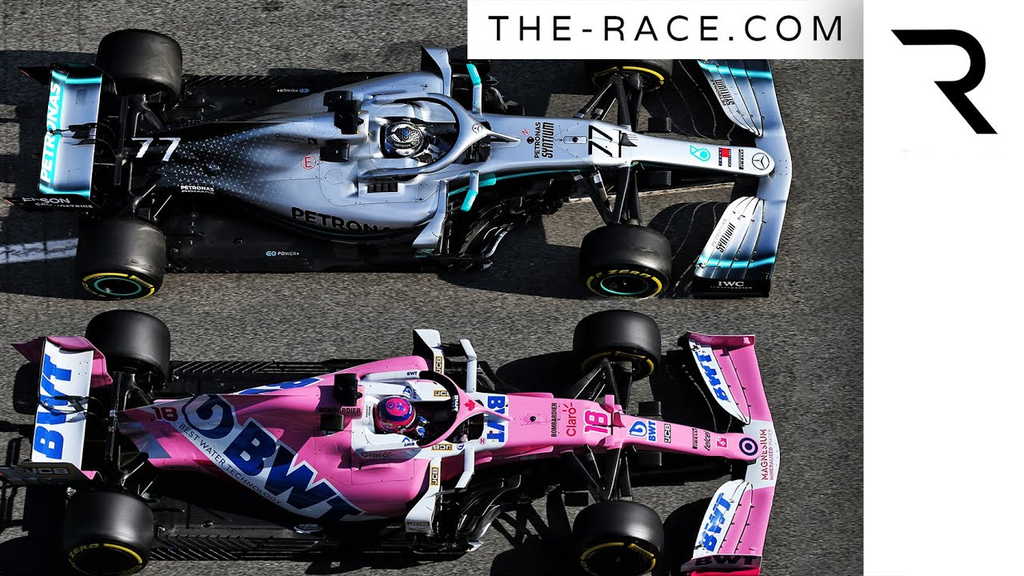
Inset: How Racing Point ‘Copied’ Mercedes (Source)
The result is co‑opetition: competition on race day, but enough co-operation off track to keep the whole ecosystem financially viable and competitive
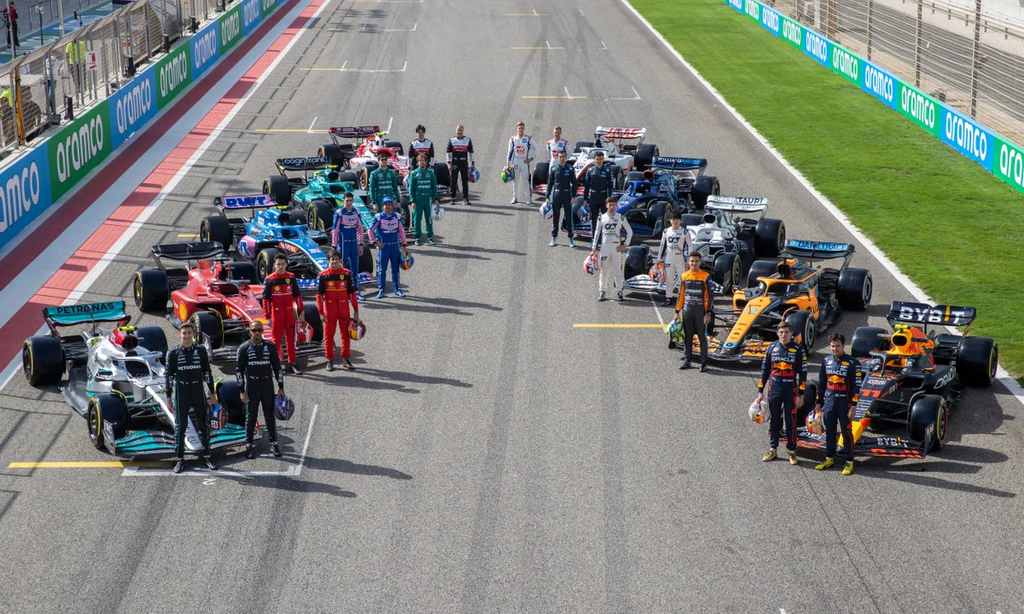
(Source)
Same Tread, Different Tyre
The same co-opetition model is not just common in the world of F1/sports but also the business landscape as well, with competitors deliberately sharing a common foundation so they can focus their efforts on differentiation, branding, and execution instead of reinventing the wheel. The underlying logic is perhaps best explained in the concept of Game Theory
- If every firm tries to “win everything” alone, the market becomes a zero‑sum game (one winner, many losers).
- Co-opetition turns parts of the market into a positive‑sum game: competitors co-operate on shared layers (standards, infrastructure etc.) to grow the total market, then compete to capture a bigger slice of that larger pie.
- In game‑theory terms, firms move from “I win only if you lose” to “we both gain by expanding the ecosystem, then compete over who gets more of the new value.”
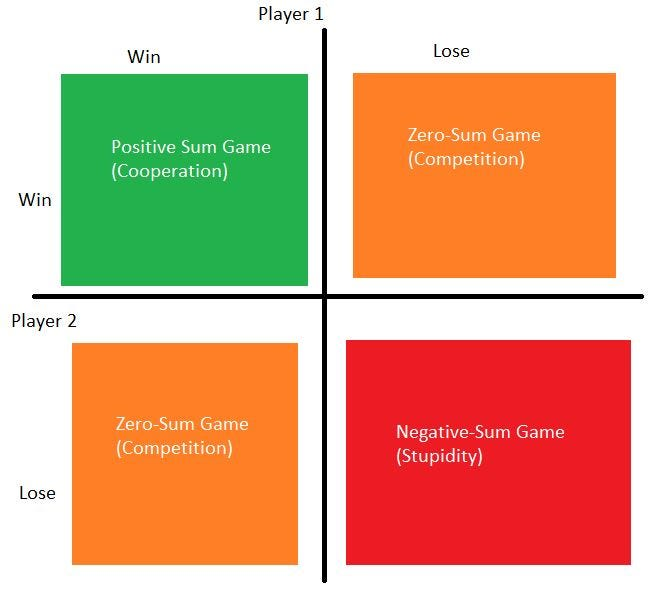
Few examples from the tech industry that illustrate it
- Android OS: Google’s Android Open Source Project keeps the core operating system open-source, letting any manufacturer take it, modify it, and ship phones, who then compete on camera, build quality, pricing and after-sales service. None of them benefit from rebuilding a mobile OS from scratch, the real competition happens in what they layer on top of the shared core.
- Microsoft and Apple (1997): In 1997, with Apple near collapse, Microsoft made a $150 million investment in exchange for non-voting shares, committing to develop Office for Mac while Apple dropped a long-running lawsuit and made Internet Explorer its default browser. The logic was pragmatic: if Apple failed, Microsoft would be cast as the monopolist that crushed its last major rival, inviting regulatory scrutiny. By keeping Apple alive, Microsoft preserved a two-player PC ecosystem that reassured developers and eased antitrust pressure.
- Cloud and chips: AWS, Microsoft Azure, and Google Cloud compete aggressively for enterprise customers, yet all support the same open standards such as Kubernetes, Linux, common data formats and contribute to shared open-source projects that no single company wants to own outright. This co-operation happens at the infrastructure layer: standards, security baselines, and developer tooling that make enterprises comfortable adopting cloud in the first place, expanding the total market.
On your Marks => Get Set => StartUP
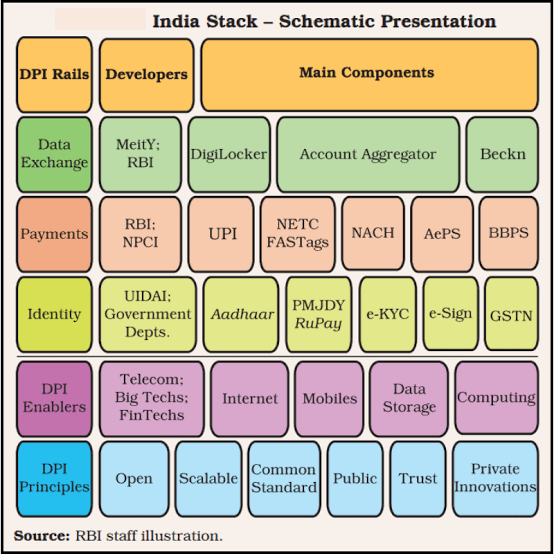
In the startup ecosystem specifically, this shared ecosystem has been facilitated largely by the India Digital Stack (DPI) across several domains
- Finance: UPI and NPCI’s shared rails – PhonePe, Google Pay, and Paytm are in a bruising fight for wallet share, but none of them had to build their own payments network to compete, because the rails were built once and opened to everyone.
- Commerce: ONDC is an attempt to do the same thing for e-commerce discovery and logistics – a shared protocol that lets a hyperlocal grocer and a large retailer both plug in, competing on service and price rather than on who owns the pipe.
- Health: The Ayushman Bharat Digital Mission gives every citizen a health ID (ABHA) and common standards to share records. Startups and hospitals then compete on care quality, pricing, and UX, instead of each building its own health‑ID and data format.
(Source)
The founders who understand this build faster, because they stop trying to win the parts of the business that were never going to be a differentiator in the first place. The founders who don’t waste a seed round reinventing a payments stack that nine other companies are already running on.
Auxano’s View: Sharing the Grid With Our Co-Investors
At Auxano, this co-opetition dynamic shows up in how we invest, not just in what we invest in. In several cases, we connect with the investors to better structure the fundraise and ultimately make sure the company gets adequate support to achieve a meaningful outcome for all stakeholders.
- In a recent deal, we spoke with an existing lead investor around compliance gaps found during DD, and discussed how to structure the fix going forward. The lead investor was aligned with our inputs and agreed that the compliance for the company needs to be streamlined, with the founders already initiating and working on this simultaneously alongside the fundraise.
- In another, a founding team had diluted significantly across rounds and the current raise would take them below 50% ownership. The founders took this up with their existing investors, who despite initial reservations agreed that it is in everyone’s best interest to ensure the founders have adequate shareholding moving forward as the company raises larger rounds in the future.
Takeaway
Co-opetition is not a compromise between different players in the ecosystem – it is a layering decision. The teams, companies, and investors that get it right share the foundation that doesn’t differentiate them: the engine spec, the OS core, the payment rails and the compliance standards that keep every stakeholder’s outcome intact.
They compete hard everywhere else – product, distribution, judgment, timing – because that’s where the actual race gets won or lost.
Get the layering wrong, and the costs increase. Treat the shared foundation as a place to compete, and you waste resources rebuilding something that was never going to set you apart. Treat the parts that should be contested as another place to co-operate, and you hand a rival the exact edge that was yours to take.
Author,
Aditya Golani